



Fluorescent Dye
Fluorescence is a phenomenon of photoluminescence in luminescence. When an atom is irradiated by light, some electrons around the nucleus jump from their original orbitals to higher energy orbitals under the influence of light energy, i.e., from the ground state to the first or second excited single-line state, etc. Due to the instability of the first or second excited singlet state, the electron returns from the excited singlet state to the ground state accompanied by released energy, resulting in fluorescence.
Fluorescent dyes can be covalently bound or physically adsorbed in the structure of the substance. The fluorescence properties allow for the characterization, localization and quantitative analysis of the labeled object. Fluorescent dyes have shown great potential for the detection of proteins, nucleic acids, cells, and immunoassays, attributed to the advantages in non-radioactive contamination, simple experimental operation and easy observation.
Fluorescent dyes have penetrated many fields such as pharmacology, physiology, environmental science, and information science, as well as functional studies of proteins and drug screening.
All Product Categories
-
Fluorescent Dye Related Products (4914)
Related Products (4914)

-
Antibodies (4)
-
Datura Stramonium Lectin-Cy5
 0 ImagesCat. No.: HY-NP065KSynonyms: DSL-Cy5Datura Stramonium Lectin-Cy5 (DSL-Cy5) is a datura lectin (DSL) labeled with the Cy5 fluorescent dye. Datura Stramonium Lectin is a dimeric glycoprotein that specifically recognizes and binds to glycan structures containing N-acetylglucosamine (GlcNAc) oligomers. Datura Stramonium Lectin-Cy5 can be used for glycosyl studies on cell surfaces (Ex/Em = 646/664 nm).
-
Pigment black 32
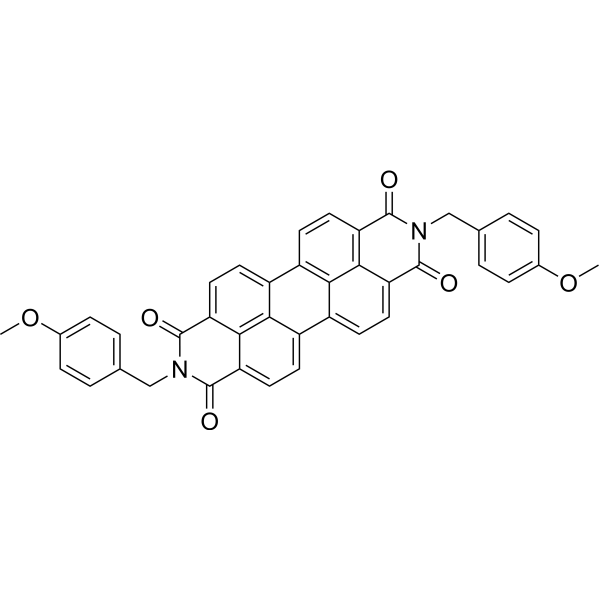 0 ImagesCat. No.: HY-D0741CAS No.: 83524-75-8Pigment black 32 is a multifunctional dye. Dyes are important tools in biological experiments. They can help researchers observe and analyze cell structures, track biomolecules, evaluate cell functions, distinguish cell types, detect biomolecules, study tissue pathology and monitor microorganisms. Their applications range from basic scientific research to clinical A wide range of diagnostics. Dyes are also widely used in traditional fields such as textile dyeing, as well as in emerging fields such as functional textile processing, food pigments and dye-sensitized solar cells.
-
5-Nitro BAPTA tetramethyl ester
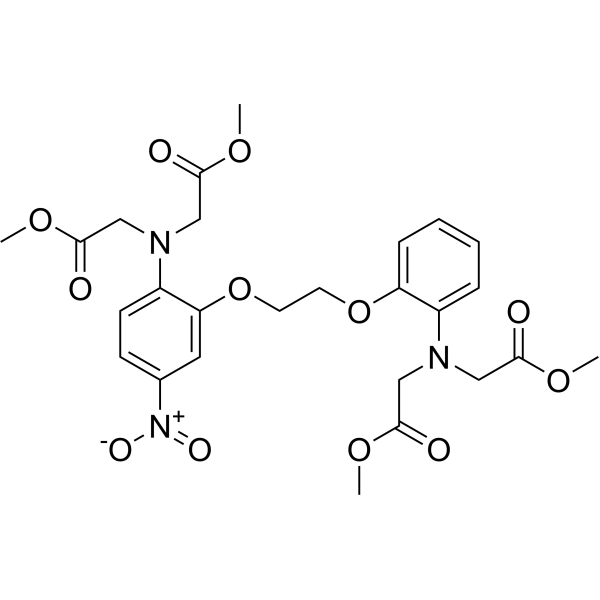 0 ImagesCat. No.: HY-D1637CAS No.: 172646-43-45-Nitro BAPTA tetramethyl ester is a calcium chelator. 5-Nitro BAPTA tetramethyl ester involves in the two-photon probe synthesis, and is used for real-time imaging of intracellular calcium ions, calcium waves monitoring at a depth of 100-300 μm in liver tissues for 1100-4000 s. 5-Nitro BAPTA tetramethyl ester, together with fluorescent compound 2-Me-substituted TM, can be used to form a red fluorescent probe (CaTM-2 AM).
-
RB-PEG2000-Biotin
 0 ImagesCat. No.: HY-D2889CSynonyms: Rhodamine B-PEG2000-BiotinRB-PEG2000-Biotin (Rhodamine B-PEG2000-Biotin) is a fluorescent dye composed of Rhodamine B (HY-Y0016), PEG and a Biotin. Biotin can bind with high affinity to streptavidin or avidin. RB-PEG2000-Biotin plays an important role in the specific capture and detection of biomolecules (Ex/Em=546/610 nm).
-
PTPA-QM
 0 ImagesCat. No.: HY-D3430PTPA-QM is a low-cytotoxicity Aβ protein probe that can be used for live-cell imaging and tissue section staining (Lys. Ex/Em = 385/615 nm). PTPA-QM can intercalate into the β-sheet layered structure of β-amyloid fibrils, form intermolecular interactions with amino acid residues, restrict intramolecular rotation and trigger fluorescence activation for imaging purposes. PTPA-QM is applicable to Alzheimer's disease-related research. Maximum excitation/emission wavelength: 448/605 nm.
-
BTCy
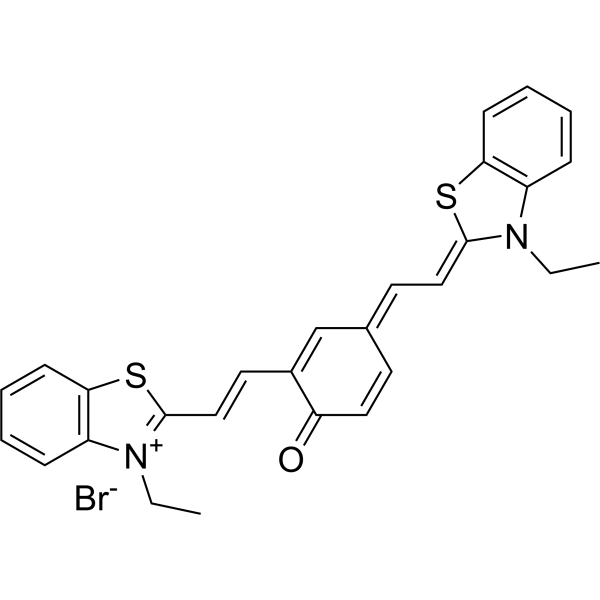 0 ImagesCat. No.: HY-152102BTCy is a near-infrared (NIR) fluorescence probe with polarity-responsive and cell plasma membrane-targeting properties. BTCy can be used for in vivo imaging of tumor tissue (λex = 561 nm, λem = 600-700 nm).
-
Cy3 labled Pixofisiran sodium
 0 ImagesCat. No.: HY-177657DCy3 labled Pixofisiran sodium is a Cy3 labled Pixofisiran sodium.
-
RB-PEG5000-COOH
 0 ImagesCat. No.: HY-D2881ESynonyms: Rhodamine B-PEG5000-COOHRB-PEG5000-COOH (Rhodamine B-PEG5000-COOH) is a fluorescent dye composed of Rhodamine B (HY-Y0016), PEG and a COOH. RRB-PEG5000-COOH can be used for fluorescent labeling and imaging (Ex/Em=546/610 nm).
-
NRh-Cu
 0 ImagesCat. No.: HY-D3152CAS No.: 2361979-91-9NRh-Cu is a highly sensitive near-infrared fluorescence turn-on indicator and Cu2+-selective probe (λex=680 nm, λem=740 nm). When NRh-Cu interacts with Cu2+, it undergoes a structural transition from a non-fluorescent spirocyclic state to a fluorescent ring-opened state, which drives the enhancement of fluorescence emission. NRh-Cu can be used for Cu2+ imaging in live cells and in vivo.
-
C.I. Food Blue 5:2
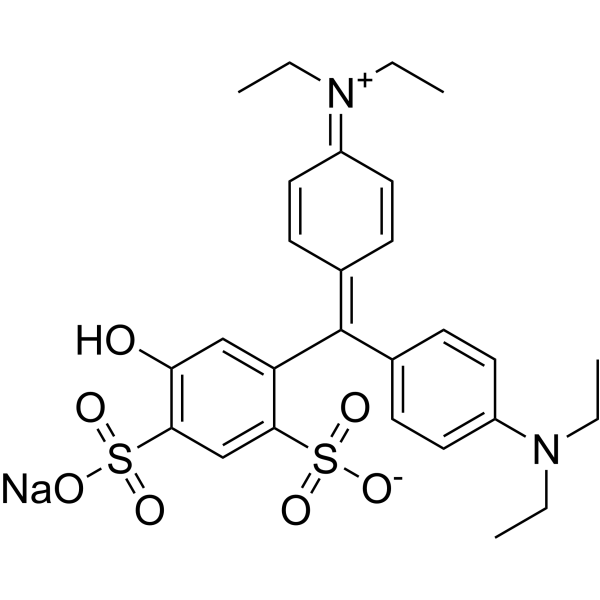 0 ImagesCat. No.: HY-D0523CAS No.: 20262-76-4C.I. Food Blue 5:2 is a multifunctional dye. Dyes are important tools in biological experiments. They can help researchers observe and analyze cell structures, track biomolecules, evaluate cell functions, distinguish cell types, detect biomolecules, study tissue pathology and monitor microorganisms. Their applications range from basic scientific research to clinical A wide range of diagnostics. Dyes are also widely used in traditional fields such as textile dyeing, as well as in emerging fields such as functional textile processing, food pigments and dye-sensitized solar cells.
-
3,3',5,5'-Tetraethylbenzidine
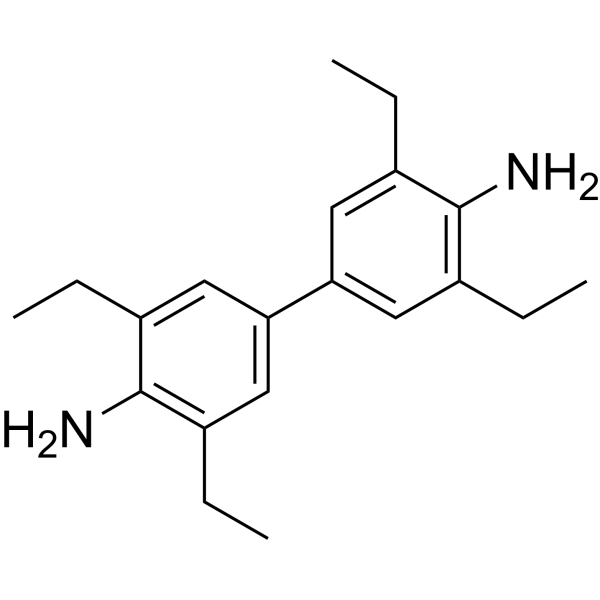 0 Images3,3',5,5'-Tetraethylbenzidine is a multifunctional dye. Dyes are important tools in biological experiments. They can help researchers observe and analyze cell structures, track biomolecules, evaluate cell functions, distinguish cell types, detect biomolecules, study tissue pathology and monitor microorganisms. Their applications range from basic scientific research to clinical A wide range of diagnostics. Dyes are also widely used in traditional fields such as textile dyeing, as well as in emerging fields such as functional textile processing, food pigments and dye-sensitized solar cells.
-
Dienes Mycoplasma Staining Solution
 0 ImagesCat. No.: HY-DY2031Dienes Mycoplasma Staining Solution is a Romanovsky type absorbent composite staining solution, containing Methylene Blue (HY-14536) and Azure II (HY-D0946). Dienes Mycoplasma Staining Solution is used for identifying mycoplasma colonies growing on solid agar, or for staining fixed cell cultures and tissue sections. Dienes Mycoplasma Staining Solution can distinguish between tiny cell-free bacteria and ordinary bacterial colonies under an optical microscope.
-
Octadecyl Rhodamine B perchlorate
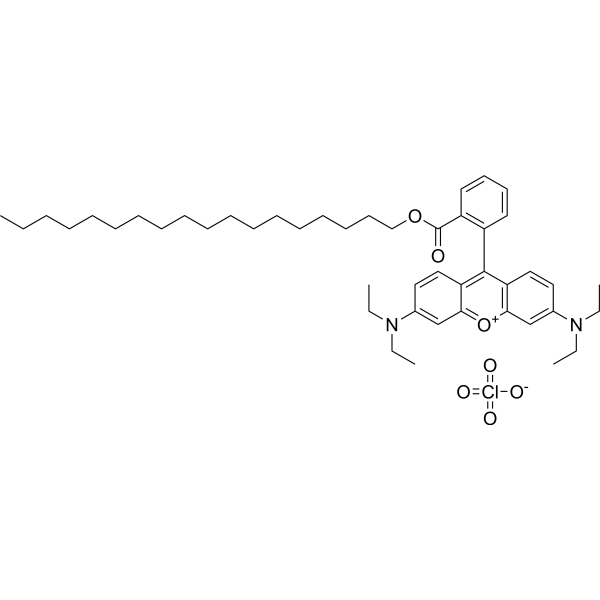 0 ImagesCat. No.: HY-D0139CAS No.: 142179-00-8Octadecyl Rhodamine B (perchlorate) is a multifunctional dye. Dyes are important tools in biological experiments. They can help researchers observe and analyze cell structures, track biomolecules, evaluate cell functions, distinguish cell types, detect biomolecules, study tissue pathology and monitor microorganisms. Their applications range from basic scientific research to clinical A wide range of diagnostics. Dyes are also widely used in traditional fields such as textile dyeing, as well as in emerging fields such as functional textile processing, food pigments and dye-sensitized solar cells.
-
RB-PEG3400-FA
 0 ImagesCat. No.: HY-D2888DSynonyms: Rhodamine B-PEG3400-FARB-PEG3400-FA (Rhodamine B-PEG3400-FA) is a fluorescent dye composed of Rhodamine B (HY-Y0016), PEG and Folic acid (FA) (HY-16637). RB-PEG3400-FA can be used for cell imaging, folate receptor targeting and detection (Ex/Em=546/610 nm).
-
FAM labled Onvuzosiran sodium
 0 ImagesCat. No.: HY-177652CFAM labled Onvuzosiran sodiumis a FAM labled Onvuzosiran sodium.
-
Lycopersicon esculentum (Tomato) Lectin-AF405
 0 ImagesCat. No.: HY-NP071BSynonyms: LEL-AF405Lycopersicon esculentum (Tomato) Lectin-AF405 (LEL-AF405) is Lycopersicon esculentum lectin (LEL) labeled with the AF405 fluorescent dye. Lycopersicon esculentum (Tomato) lectin specifically recognizes and binds to glycan structures, primarily targeting N-acetyl-β-D-glucosamine residues. Lycopersicon esculentum (Tomato) Lectin-AF405 can be used to study glycosylation and localize glycan structures on cell surfaces and in tissue sections (Ex/Em = 405/435 nm).
-
Si-DMA
 0 ImagesCat. No.: HY-D3409CAS No.: 1854026-50-8Si-DMA is a far-red fluorescent singlet oxygen probe (Ex/Em = 640/690 nm). After reacting with singlet oxygen, Si-DMA forms an endoperoxide with a 17-fold fluorescence enhancement. Si-DMA localizes selectively to mitochondria with negligible auto-oxidation. Si-DMA can be used for high spatiotemporal resolution visualization and detection of mitochondrial singlet oxygen in living cells.
-
3-Nitrotetrazolium blue chloride
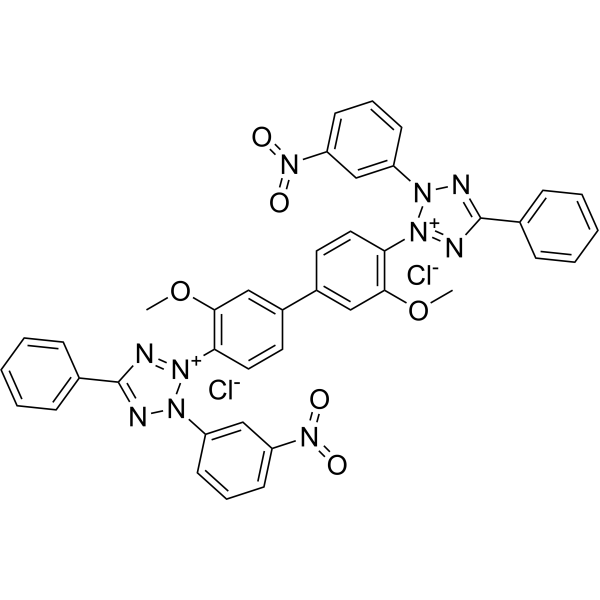 0 ImagesCat. No.: HY-D1192CAS No.: 38184-50-83-Nitrotetrazolium blue (chloride) is a multifunctional dye. Dyes are important tools in biological experiments. They can help researchers observe and analyze cell structures, track biomolecules, evaluate cell functions, distinguish cell types, detect biomolecules, study tissue pathology and monitor microorganisms. Their applications range from basic scientific research to clinical A wide range of diagnostics. Dyes are also widely used in traditional fields such as textile dyeing, as well as in emerging fields such as functional textile processing, food pigments and dye-sensitized solar cells.

-
Biotin-FRETS-VWF73 TFA
 0 ImagesCat. No.: HY-DP5354AFBiotin-FRETS-VWF73 TFA is a biotin-labeled 73-amino acid peptide. FRETS-VWF73 TFA is a fluorescent substrate for ADAMTS13 detection (Ex=340 nm; Em=450 nm).




